Pourquoi certains joueurs gagnent bien plus que les autres (on a fouillé les données)
L'équipe Clutch · Publié le 13 août 2026
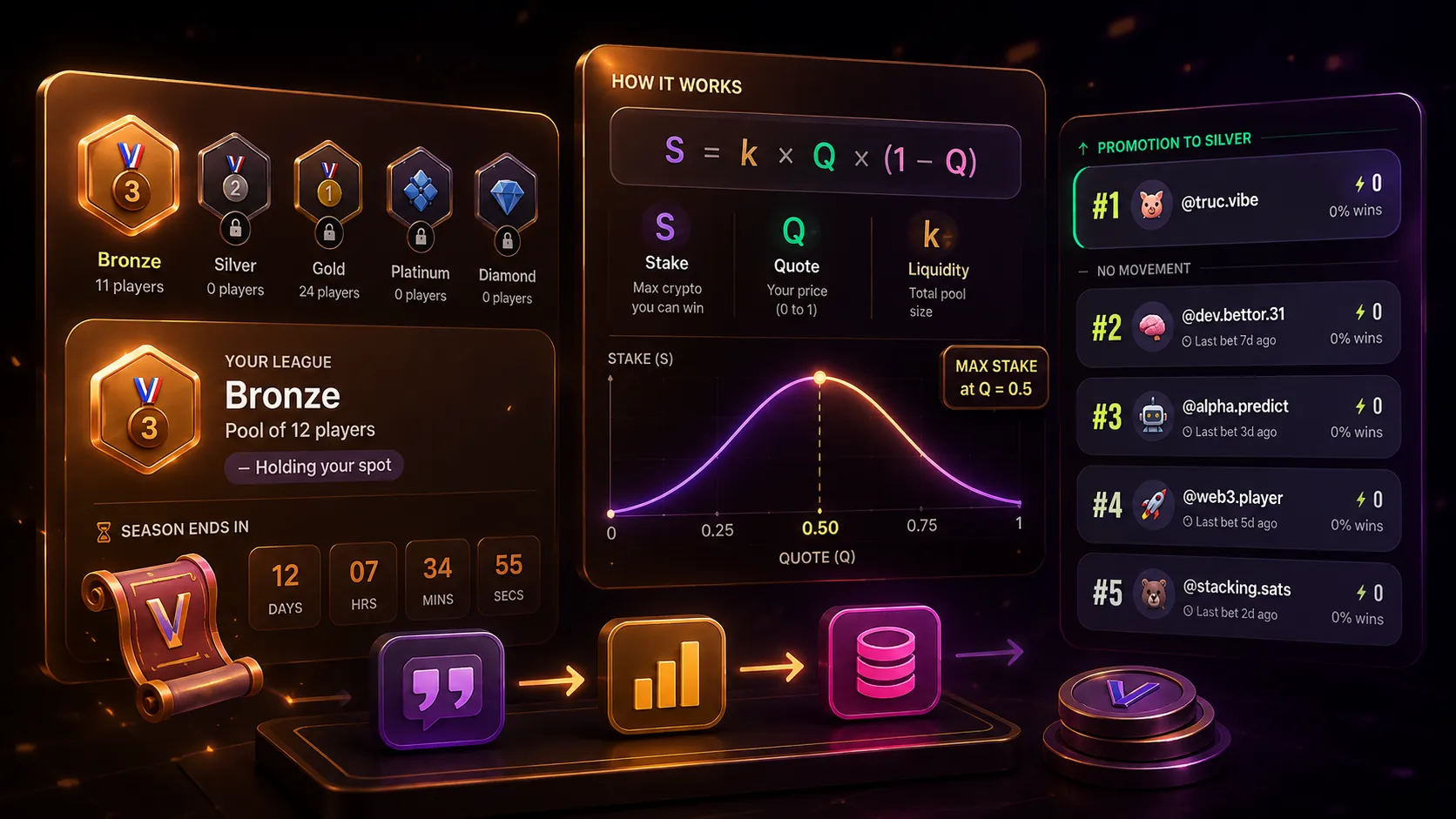
Deux joueurs ouvrent Clutch le même matin, voient les mêmes marchés et commencent à pronostiquer. Six semaines plus tard, l'un a quelques milliers de points et l'autre en a soixante mille. Ils jouent exactement au même jeu. Alors, que sait le grand gagnant que les autres ignorent ? On est allés voir dans les données, et la réponse n'est pas celle que la plupart des gens attendent.
Une précision honnête avant de commencer. Clutch est gratuit et sans pari en argent réel. Vous engagez des Crédits, que vous gagnez gratuitement, et quand vous avez raison vous remportez des Points, que vous pouvez échanger contre des récompenses. Personne ne joue de l'argent. Mais la question de la stratégie est bien réelle, et l'écart entre les joueurs occasionnels et le haut du classement est plus grand qu'on ne le croit.
D'abord, comment fonctionne une prédiction
Chaque marché est une question oui/non, et les probabilités ne sont que la réponse de la communauté. Quand beaucoup de Crédits s'accumulent sur Oui, le prix de Oui grimpe vers 100 % et Non devient moins cher. Ce prix, c'est la probabilité, et c'est lui qui décide de votre gain.
La seule règle qui explique tout
- Votre gain évolue à l’inverse des probabilités. Plus la probabilité est faible au moment où vous faites votre prédiction, plus une victoire rapporte.
- Engagez 100 Crédits sur un marché à pile ou face à 50 %, et une victoire vaut environ 480 Points.
- Engagez les mêmes 100 Crédits sur un gros favori à 80 %, et une victoire ne vaut plus qu’environ 300 Points.
- Engagez-les sur un outsider à 8 %, et une seule victoire peut valoir environ 3 000 Points.
Relisez cette dernière ligne. Les mêmes 100 Crédits peuvent rapporter six fois plus, ou dix fois plus, uniquement selon le caractère improbable du résultat au moment de la prédiction. Ce simple fait décide discrètement qui grimpe au classement.
La plupart des joueurs jouent la sécurité
Quand on regarde tous ceux qui ont fait au moins quelques prédictions, le joueur type est prudent. Le joueur actif médian compte environ 21 prédictions réglées et en gagne à peu près 70 %. Ça a l'air formidable, et ça fait du bien, mais il y a un piège.
Gagner 70 % de ses prédictions signifie presque toujours jouer les favoris. Et les favoris, par définition, rapportent très peu. Vous pouvez avoir raison sept fois sur dix et à peine bouger, car chaque victoire ne fait que grignoter votre score.
Le plus contre-intuitif : les plus gros gagnants se trompent plus souvent
C'est là que les données deviennent amusantes. On a regroupé les joueurs actifs par style, et le résultat nous a nous-mêmes surpris.
Même jeu, résultats très différents
- Les joueurs qui choisissent surtout des favoris gagnent environ 72 % de leurs prédictions, et totalisent en moyenne autour de 5 700 Points.
- Les joueurs qui choisissent surtout des outsiders gagnent moins de 43 % de leurs prédictions, ils perdent donc plus d’une fois sur deux, et pourtant ils totalisent en moyenne autour de 9 600 Points.
- Soit environ 70 % de Points en plus, gagnés par le groupe au moins bon taux de réussite.
Ça paraît à l'envers, mais le calcul est simple. Le camp des outsiders perd plus de prédictions, mais chaque victoire rapporte tellement plus qu'elle compense largement la différence. La précision n'est pas l'objectif. Avoir raison quand personne d'autre ne l'a, voilà l'objectif.
Voici notre joueur numéro un
Maintenant, la version extrême. Notre plus gros gagnant de Points ne compte que 71 prédictions réglées. Pas 700, pas 7 000. Soixante et onze. Et il en a tiré plus de 67 000 Points, en battant des joueurs qui ont joué dix fois plus souvent.
Comment ? Près de neuf de ses prédictions sur dix portent sur des outsiders, le camp que la communauté avait déjà enterré. Il engage beaucoup de Crédits, souvent le maximum, et il a raison dans 84 % des cas, un chiffre stupéfiant. Cette combinaison, des choix à contre-courant plus une grande précision, c'est du carburant de fusée dans un système de gains qui récompense les outsiders.
Trois vraies prédictions de son compte
- Il a mis 100 Crédits sur Non alors que la communauté était sûre à environ 92 % qu’un gros programme Netflix dépasserait 12 millions de vues. Ça n’a pas été le cas. Gain : 3 019 Points.
- Il a mis 100 Crédits sur Non alors que la communauté était sûre à environ 88 % que ChatGPT resterait l’application gratuite numéro un un jour donné. Ça n’a pas été le cas. Gain : 2 034 Points.
- Il a mis 100 Crédits sur un pronostic de sondage politique que le marché avait fixé autour de 12 %. C’est passé. Gain : 1 898 Points.
Chacune de ces prédictions était un moment où la communauté était confiante et où il n'était pas d'accord, avec une raison. Une bonne prédiction à contre-courant a rapporté plus que des dizaines de prédictions prudentes sur des favoris réunies.
Alors, comment gagner davantage ?
La leçon n'est pas de toujours jouer les outsiders. La plupart des joueurs très portés sur les outsiders gagnent quand même moins d'une fois sur deux, et si vos choix sont au hasard, l'effet de levier joue contre vous tout aussi fort. L'avantage, c'est le jugement.
- Cherchez les favoris surcotés. Les plus gros gains viennent de repérer quand la communauté est trop sûre d’elle, et d’avoir raison.
- Ne vous dispersez pas. Les meilleurs joueurs sont sélectifs. Quelques prédictions à forte conviction battent une centaine de prédictions paresseuses.
- Engagez beaucoup de Crédits quand vous êtes sûr. Les gagnants ont tendance à engager près du maximum sur leurs meilleurs coups, pas sur les pires.
- Respectez la variance. Les outsiders perdent plus souvent qu’ils ne gagnent. Ne foncez que lorsque vous savez vraiment quelque chose que la communauté ignore.
Voilà tout le jeu en une phrase. Ceux qui gagnent le plus ne sont pas ceux qui ont raison le plus souvent. Ce sont ceux qui ont raison au moment précis où tous les autres ont tort.
Vous voulez le détail complet des probabilités, des Crédits engagés et des gains ? Découvrez comment Clutch fonctionne.
Vous pensez lire la foule mieux que la foule ? Téléchargez Clutch et voyez où vous vous situez.
Plus d'articles du blog

Batailles de clubs : votre club contre un autre, chaque semaine
Les batailles de clubs arrivent. Chaque semaine, votre club affronte un club de votre niveau : misez des tickets 🎟️, gagnez des couronnes 👑, boostez vos coéquipiers depuis le banc et gagnez jusqu’à 200 Crédits 💎 chacun. Voici comment ça marche.

On vous a confié le verdict. Puis les guerres ont commencé.
Il y a dix jours, on vous a confié le verdict. Depuis, vous avez tranché 666 marchés, pris en charge presque tous en quelques minutes, mené 75 guerres, et 99,4 % de vos verdicts ont tenu. Voici tout ce qu’on a appris, le bon comme le moins bon.

La résolution communautaire arrive : tranchez les marchés, engagez des ⚡, gagnez la prime
Les joueurs Clutch peuvent désormais trancher eux-mêmes les marchés fermés en engageant une caution en ⚡ derrière leur verdict. Le déploiement est progressif, en commençant par un premier groupe de joueurs. Voici qui peut participer, comment proposer et contester, comment gagner, et pourquoi on avance prudemment.

Un joueur, 211 comptes, 2 secondes : comment on a démasqué une ferme de téléphones sur Clutch
Cinq « joueurs » ont fait exactement le même pronostic, dans le même ordre, à une demi-seconde d’intervalle. Puis encore. Et encore. Voici comment on a démasqué une ferme de téléphones qui faisait tourner 211 faux comptes, et ce qu’on a fait ensuite.

Une petite équipe française
Clutch est construit par une petite équipe basée en France. Nous ne sommes qu'une poignée de personnes, et nous tenons beaucoup à faire le meilleur jeu de prédiction possible. Chaque joueur qui nous rejoint nous pousse à faire mieux.
En savoir plus sur Rodger StudioJouez à Clutch
Clutch est un jeu de prédiction gratuit et sans argent réel. Prédisez l'actualité et le sport avec des crédits intégrés, grimpez dans votre ligue et construisez votre palmarès.